

I write today to defend the honor of Spain. I had the good fortune to live in Madrid for a couple years in my early twenties, and I look back on my time there with great fondness. It still rankles me when I hear stereotypes about the Spanish people, especially the notion that they lack a strong work ethic. So I was pleased to come across a story of epic initiative by a Spaniard in a book I’m reading.
The book talks about the rise, in the 1990s, of universal jurisdiction, the idea that any country could judge and prosecute crimes that took place anywhere in the world. This idea appealed to countries all across Europe, because they think they’re better than everyone.
Universal jurisdiction was reserved for the most serious crimes, things like torture and genocide and crimes against humanity. The mere chance that perpetrators of these crimes might one day be punished explains why, over the past three decades, courts around the world have seen that I have been on my best behavior.
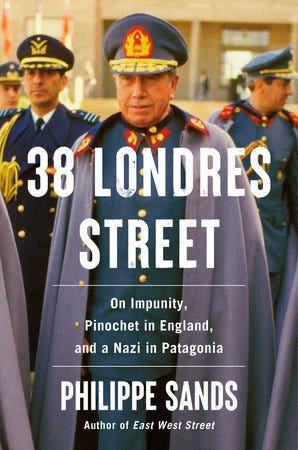
The villain of this book is former Chilean President Augusto Pinochet. In 1973 he led a coup, took over, and went on to rule Chile for almost seventeen years. During his time in office, he oversaw the killing and disappearance of thousands of people and the torture of tens of thousands more. He was, in the words of the late Norm Macdonald, “a real jerk.”
You might have the impression that Pinochet led a lawless regime. That’s misleading. Pinochet loved the law, and wanted everyone to respect and follow the law, especially the 1978 law that he signed into law that made it against the law to punish him for breaking the law.
Into the story stepped Pinochet’s worst nightmare, the enterprising Spanish judge Baltasar Garzón. By the late 1990s, Garzón had had Pinochet in his crosshairs for a couple years, trying to figure out a way to hold him accountable for his crimes. Then Pinochet gave him an opening by traveling to London. The British Foreign Secretary at the time made a big fuss about having an “ethical foreign policy” centered on human rights. This was a refreshing change of pace from Britain’s historical foreign policy of “Trade us tea for opium or we will kill you.”
The cooperative British government kept Garzón posted on Pinochet’s whereabouts as he prepared to travel to London to question him. But one Friday, very late in the Spanish workday, a red alert came in from the Brits: Pinochet might leave London the next day. British authorities couldn’t detain Pinochet just so Garzón could question him. Garzón felt he had no choice. He had to issue a warrant for Pinochet’s arrest, to extradite him to Spain to face criminal charges.
This was a big deal. If he succeeded, it would be the first time that a foreign country arrested a former head of state on the basis of universal jurisdiction. Given the late hour, all but one employee (an assistant clerk) had already gone home, and the files Garzón needed were locked away for the weekend. So Garzón wrote the details needed for the arrest warrant entirely from memory.
But he had one seemingly insurmountable obstacle to get around before he could issue the warrant. He had to notify and get the approval of the conservative chief prosecutor, who had opposed Garzón’s investigation of Pinochet for well over a year.
It became a simple battle of who wanted it more. Garzón waited to notify the prosecutor until there was no chance that he was still at the office: 2:58 pm.
It was Friday, and the office closed at three. The prosecutor was, in fact, nowhere in sight. Garzón had it noted that he had been unable to locate the chief prosecutor. A bit after 3 pm, the arrest warrant went off to the UK.
For context, when Garzón got word of Pinochet’s looming departure, and there was only one other employee still at the office, and the files were already locked up for the weekend, it was 1:45 pm. That employee, the assistant clerk, later complained to the book’s author that “it always happens to me, I’m always the last one!”
Garzón then worked on the warrant for almost an hour. Scotland Yard arrested Pinochet later that night. Because nothing is impossible if you want it so badly that you’re willing to work after you’ve had lunch.
Not wanting to defy stereotypes any further, Garzón left the office and spent the night watching a bullfight.